
Why Traditional Branding Models Are No Longer Enough
Updated: Jun 4
For decades, businesses have invested heavily in building strong brands. We've learned how to define target audiences, articulate brand values, create compelling narratives, and build emotional connections with customers. Branding has become one of the most powerful disciplines in modern business, helping companies differentiate themselves, command premium prices, and create long-term loyalty.
But what if a strong brand is no longer enough?
What if the models and frameworks that have guided brand-building for the past fifty years are no longer sufficient to navigate the challenges and opportunities of today's world?
I believe we are witnessing the biggest transformation in branding since the digital revolution.
And it is happening faster than most organisations realise.
A New Reality Demands New Thinking
Most traditional branding models were developed during an era where growth was the primary measure of success. Companies were evaluated on market share, revenue growth, profitability, and customer acquisition. Branding's role was to create awareness, preference, and differentiation. Those objectives still matter. But the context has fundamentally changed.
In July 2025, the International Court of Justice ruled that states have a legal obligation to protect the climate from harmful human-induced change. At the same time, scientific research suggests that humanity has already crossed seven of the planet's nine planetary boundaries.
These developments are not simply environmental concerns. They represent profound business challenges.
Climate risks, resource constraints, biodiversity loss, social inequality, and shifting stakeholder expectations are increasingly influencing markets, regulations, investment decisions, and consumer behaviour. Sustainability is no longer a niche topic. It is becoming a defining business condition. And that changes the role of brands.
From Market Actors to System Actors
Branding has always evolved alongside society. The earliest brands functioned as marks of origin and quality. During the Industrial Revolution, brands became trust signals in increasingly anonymous markets. Later, brands evolved into cultural symbols that helped people express identity, aspirations, and belonging. Today, brands are entering a new phase.
The rise of digital platforms has fundamentally altered the relationship between organisations and their stakeholders. Customers can investigate supply chains. Employees can publicly challenge company decisions. Activists can mobilise global movements within hours.
Investors increasingly scrutinise environmental and social performance alongside financial results. In this environment, brands are no longer judged solely by what they communicate.
They are judged by what they do. As a result, brands are becoming more than market actors. They are becoming system actors. Their decisions influence consumption patterns, cultural norms, stakeholder expectations, and even societal transitions.
The question is no longer whether brands have influence.
The question is how they choose to use it.
Sustainability Is No Longer a Niche
Many organisations still treat sustainability as an add-on to the brand.
Something that belongs in a sustainability report. A communication campaign.
Or a dedicated ESG department. But market data tells a different story.
According to Sustainable Brand Index, the impact of perceived sustainability on brand preference has almost doubled in recent years. In 2022, sustainability accounted for 28% of brand preference. By 2026, that number had increased to 56%.
In other words, sustainability is moving from differentiation to expectation.
It is increasingly becoming a baseline requirement rather than a competitive advantage.
This does not mean every customer consistently chooses the most sustainable option.
Far from it.
The Great Sustainability Paradox
One of the most persistent challenges facing businesses today is the gap between intention and action. Consumers express concern about climate change. They say they want to make more sustainable choices. Yet their behaviour often tells a different story.
Research from Kantar found that 97% of consumers say they are willing to take action to live more sustainably. Yet only 13% report actively changing their behaviour.
Many organisations interpret this as consumer hypocrisy.
I believe that interpretation misses the point. If sustainable alternatives are more expensive, more complex, less convenient, or less attractive than conventional options, the problem does not sit solely with consumers. It is also a design challenge. An innovation challenge.
And ultimately, a branding challenge. The brands that succeed in the coming decade will not simply communicate sustainability. They will make sustainable choices easier, more desirable, and more valuable.
From Storytelling to Evidence
For many years, branding was dominated by storytelling. And stories still matter.
Human beings understand the world through narratives. But we are entering an era where storytelling alone is no longer sufficient to build trust. Evidence is becoming equally important.
This shift is partly driven by increasing scrutiny of greenwashing. However, an equally interesting trend is emerging: greenhushing. Many organisations are now choosing to communicate less about sustainability initiatives out of fear of criticism. Research among Danish CMOs shows that the proportion of companies refraining from communicating environmental and climate initiatives increased from 7.4% in 2023 to 17.2% in 2025.
Both extremes create problems. Greenwashing erodes trust. Greenhushing slows learning, inspiration, and positive change.The future belongs to organisations that find a third path.
A path based on transparency. Evidence. Progress.
And honest communication about both achievements and limitations.
Brands as Agents of Change
Throughout history, brands have been remarkably effective at shaping human behaviour.
They have influenced how we eat, travel, dress, communicate, and consume. This influence is often referred to as brand power. The question is no longer whether brands can drive change. The question is what kind of change they choose to drive.
If sustainability is to move from niche to mainstream, businesses must do more than sell products and services. They must help normalise new behaviours. New expectations.
And new ways of creating value. The most successful brands of the future will not simply reflect societal change. They will actively participate in creating it.
Why I Developed The Brand Value Circles
This challenge became increasingly clear throughout my work with entrepreneurs, innovation teams, brand leaders, and sustainability professionals. Again and again, I encountered the same pattern. Organisations worked on branding. Or they worked on sustainability. But rarely both at the same time.

There was a missing bridge between sustainable innovation and brand-building.
A gap between intention and engagement. A gap between impact and market relevance.
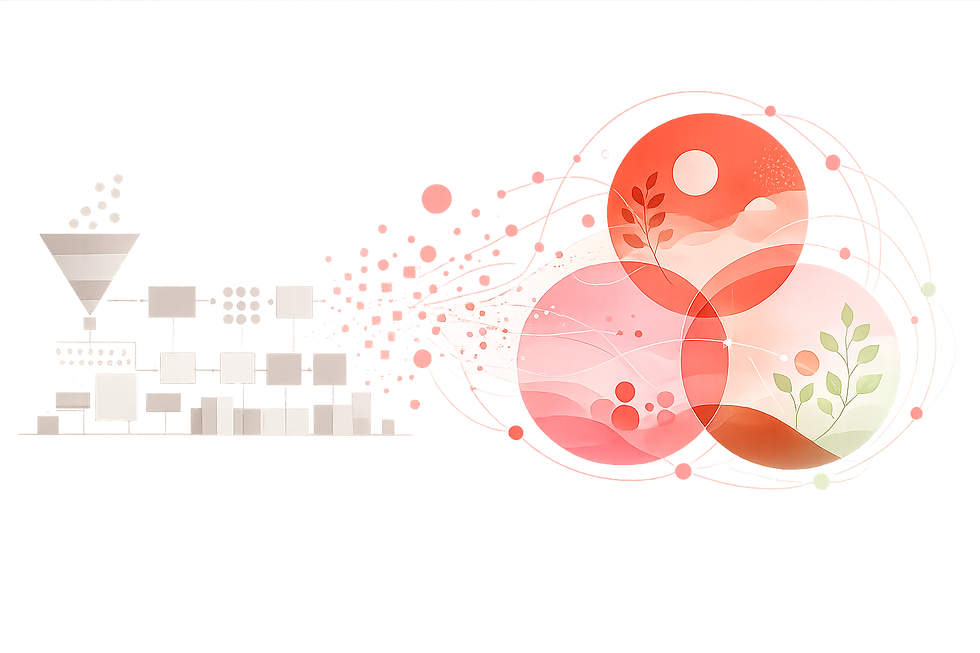
The Brand Value Circles was developed to help close that gap. It is a strategic toolbox designed to help organisations imagine better futures, create meaningful and sustainable value, and engage stakeholders in ways that are both credible and inspiring.
The framework is built around three interconnected circles:
Imagine – understanding people, trends, impact priorities, re-use of resources and opportunities.
Create – designing value propositions, ecosystems, business models, and pathways to value creation.
Engage – building identity, evidence, narratives, and messages that inspire participation and trust.
Together, they provide a practical approach to building brands that do more than communicate sustainability. They help embed sustainability into how value is created, delivered, and experienced.
The Future of Branding
The strongest brands of the future may not be the ones with the largest marketing budgets.
They will be the ones that successfully align business value, societal value, and stakeholder engagement. The ones that move beyond asking:
"How do we get more people to choose us?"
And start asking:
"What role do we want to play in the future we are helping create?"
Because in a world defined by climate challenges, resource constraints, technological disruption, and changing expectations, branding is no longer just about visibility.
It is about relevance. And perhaps more importantly: About the future your brand helps create.
Ready to Imagine the Future of Your Brand?
If traditional branding models are no longer enough, what comes next?
This is exactly the question we will explore in the first webinar of the The Brand Value Circles series: Imagine.
In this 45-minute session, I will introduce the first circle of the toolbox and show how organisations can identify future opportunities by combining customer insights, emerging trends, societal impact, and strategic resources.
Webinar: Imagine – The First Circle of The Brand Value Circles
Date: 10 June 2026
Time: 09:00 – 09:45 CET
Where: Online
Together, we will explore:
Why future-ready brands start with imagination rather than communication
How to identify opportunities emerging from major societal shifts
The role of insights, trends, impact, and resources in sustainable innovation
How the Imagine Circle helps organisations build relevance in a rapidly changing world
Whether you work with branding, innovation, sustainability, business development, or entrepreneurship, this webinar will provide practical inspiration and a new perspective on building future-fit brands.
Reserve your seat here: https://www.futuretribe.dk/events
Sign up for more news: https://futuretribe.dk/the-brand-value-circles#sign-up-for-our-newsletter
Buy the Book The Brand Value Circles and get access to a toolbox that can help teams allign around building more Sustainable Brands: https://www.futuretribe.dk/product-page/the-brand-value-circles


Comments